

Few places on Earth capture the imagination like the Serengeti. Its name, drawn from a Maasai word often translated as “endless plains,” is a perfect description of a landscape that seems to roll on forever beneath enormous skies. Lions doze on granite outcrops, cheetahs scan the grass from termite mounds, and millions of hooves drum across the earth in the greatest wildlife spectacle on the planet.
A luxury Serengeti safari takes that raw drama and wraps it in exceptional comfort, privacy, and expertise. This guide explains what makes a Serengeti safari truly luxurious, where to stay and when to go, which experiences to prioritise, what it costs, and how to plan a journey worthy of the destination.
Why the Serengeti Is the Ultimate Luxury Safari Destination
The Serengeti National Park covers roughly 14,750 square kilometres, and it forms the core of a much larger ecosystem that stretches into Kenya’s Maasai Mara and the surrounding conservation areas. Its scale is part of its magic. Even in the busiest season, the park is large enough to find quiet corners, and the best luxury camps are positioned to take full advantage of that space.
The wildlife is exceptional. The Serengeti is home to all of the Big Five, with particularly strong populations of lions, as well as cheetahs, leopards, hyenas, elephants, giraffes, hippos, and an astonishing variety of birdlife. And, of course, it hosts the Great Wildebeest Migration, in which well over a million wildebeest and hundreds of thousands of zebra and gazelles follow the rains in a continuous annual cycle.
Add to this a collection of beautifully designed camps, highly skilled guides, and a range of exclusive activities, and it is easy to see why the Serengeti is considered the pinnacle of East African safaris.
What Makes a Serengeti Safari “Luxury”?
True luxury on the Serengeti is defined less by marble bathrooms than by the quality of the experience. Look for these elements:
- A prime location. Being positioned in the right area at the right time, whether beside a river crossing, near a calving ground, or in a quiet concession, matters more than any amenity.
- Small, intimate camps. Properties with a limited number of suites offer a quieter, more personal stay.
- Expert private guiding. A dedicated guide and vehicle allow you to follow your own schedule, linger at sightings, and photograph without pressure.
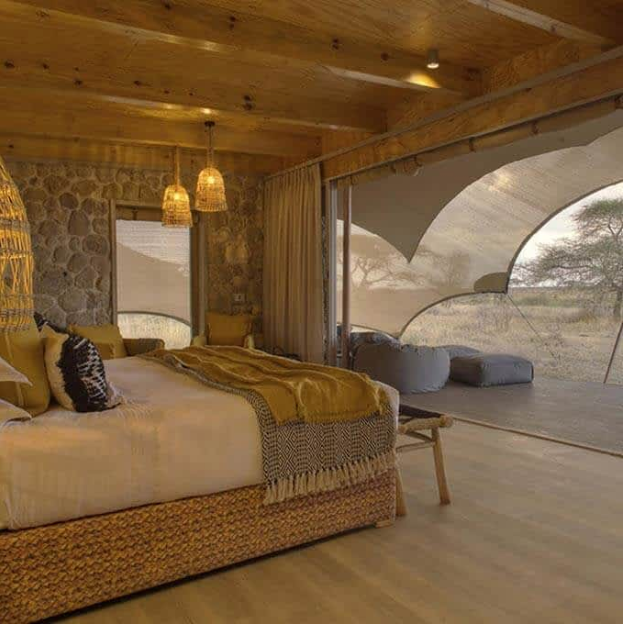
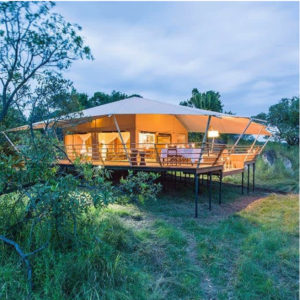
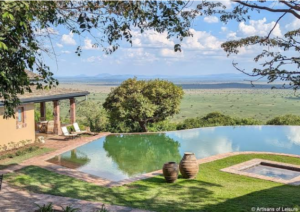
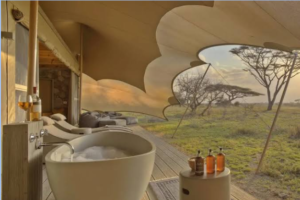
- Exceptional design and comfort. Spacious tented suites, private decks, outdoor showers, and in some cases plunge pools, all designed to blend with the landscape.
- Outstanding food and wine. From bush breakfasts to candlelit dinners, meals that match the setting.
- Seamless logistics. Charter flights between airstrips, private transfers, and a single planner who handles every detail.
- A commitment to conservation. Responsible operators support anti-poaching efforts, employ local people, and minimise their environmental footprint.
Choosing Where to Stay: The Serengeti Regions
The Serengeti is vast, and the right region depends on the time of year and your priorities.
Central Serengeti (Seronera)
The central region is the classic Serengeti, with open plains, rocky kopjes, and a permanent river system that attracts resident wildlife. It is known for strong big-cat sightings, including lions and leopards, and offers reliable game viewing throughout the year. It is also the most popular area, so choosing a camp with a quiet, well-positioned location helps.
Northern Serengeti
Remote, rolling, and relatively quiet, the north is the setting for the dramatic Mara River crossings, typically from around July to October. Even outside crossing season, the north offers excellent wildlife and few vehicles. Luxury camps here are often small and secluded, and some are seasonal.
Western Serengeti and the Grumeti
The Western Corridor follows the Grumeti River and offers river crossings in the early part of the dry season, as well as large crocodiles and abundant birdlife. The adjoining private reserves provide exclusive activities, including walking safaris and night drives, which are not permitted in the national park itself.
Southern Serengeti and Ndutu
The short-grass plains of the south are the heart of calving season, from roughly January to March, when hundreds of thousands of wildebeest calves are born over a few weeks. This is also a time of intense predator action, with lions, cheetahs, and hyenas hunting among the herds.
Mobile Camps: Following the Herds
One of the most romantic options is a luxury mobile camp, a seasonal tented camp that moves to follow the migration. With genuine beds, hot water, excellent food, and a classic bush atmosphere, mobile camps place you in the heart of the action and offer a nostalgic safari experience with modern comfort.
The Best Time for a Luxury Serengeti Safari
Because the herds follow rainfall, timing varies from year to year, but the following is a reliable guide.
- January to March: Calving season in the south, with newborn wildebeest and active predators.
- April to May: Long rains, lush landscapes, fewer visitors, and the herds moving north. Some camps close.
- June to July: The herds move through the central and western areas, with Grumeti River crossings possible.
- July to October: The northern Serengeti and Mara River crossings, plus excellent dry-season game viewing. This is peak season.
- November to December: Short rains, green scenery, and herds drifting back south, with quieter conditions.
For a first visit, many travellers choose between the calving season and the river-crossing months, depending on whether they prefer newborns and predators or dramatic water crossings. Bear in mind that wildlife is rewarding throughout the year, even outside the migration’s headline events.
Signature Luxury Experiences
A luxury Serengeti safari offers far more than the standard game drive.
- Private game drives in a dedicated vehicle with a highly experienced guide
- Hot-air balloon flights at dawn, drifting over the plains, followed by a champagne breakfast in the bush
- Walking safaris in select private areas, led by an armed guide and tracker
- Night drives in concessions where they are permitted, revealing leopards, bushbabies, and other nocturnal species
- Bush dinners and sundowners in remote, atmospheric locations
- Photographic safaris with specialist vehicles and guides
- Fly-camping for a night in the wild, away from the lodge
- Cultural visits with local communities, conducted respectfully and ethically
- Spa treatments and wellness at selected camps
Sample Itinerary: A Luxury Serengeti Safari in Seven Nights
A well-balanced itinerary might look like this:
- Nights 1 to 2: Tarangire or Ngorongoro. Begin with elephants and baobabs or the wildlife-packed crater, easing into safari life.
- Nights 3 to 4: Central or Western Serengeti. Fly into the Serengeti and focus on big cats and general game viewing.
- Nights 5 to 7: Northern or Southern Serengeti. Move to the region best placed for the migration at the time of your visit, with a different camp for variety.
- Departure. Fly back to Arusha, or continue to Zanzibar for a beach finish.
Splitting your stay between two camps in different areas is one of the best ways to experience the Serengeti’s variety and improve your chances of encountering the herds.
What Does a Luxury Serengeti Safari Cost?
Serengeti luxury is priced at a premium, reflecting remote locations, small camps, and all-inclusive service. As a broad guide, high-end camps often range from roughly 700 to well over 2,000 US dollars per person per night. Peak migration periods, the calving season, and ultra-exclusive private camps sit at the upper end, while the green season offers more attractive pricing.
Rates typically include accommodation, meals, drinks, guided activities, and park fees, though inclusions vary. Charter flights, balloon safaris, and extensions such as Zanzibar are often additional. Check exactly what is included, and consult a specialist for current pricing and availability.
Practical Tips for Planning
- Book early. The best camps are small, and peak-season rooms can sell out a year or more ahead.
- Prioritise position over amenities. Being near the herds or a river crossing matters more than any extra comfort.
- Allow enough time. Stay at least four to five nights in the Serengeti, ideally split across two camps.
- Be patient. River crossings and predator action cannot be scheduled, and waiting is part of the experience.
- Pack light. Charter flights have strict luggage limits, and soft-sided bags are best.
- Dress in layers. Dawn can be cold, especially on open vehicles, while afternoons are warm.
- Bring good optics. A camera with a telephoto lens and a pair of quality binoculars will transform your experience.
- Check health requirements. Consult a travel clinic about vaccinations and malaria precautions well before departure.
Travelling Responsibly
The Serengeti’s survival depends on conservation funding and community support. Park fees and camp revenues help pay for ranger patrols, habitat protection, and local development. Choose operators that employ and train local staff, use solar power and responsible water practices, and invest in the communities and wildlife around them. When you choose carefully, your safari helps protect the very landscape you have come to see.
Conclusion
A luxury Serengeti safari is a journey into one of the last great wildernesses on Earth, made all the more memorable by comfort, privacy, and expert guidance. Whether you stand on the plains as a river crossing erupts, watch newborn calves take their first steps, or simply sip a sundowner as a lion roars in the dusk, the experience stays with you long after you leave. With careful timing, the right camp, and a trusted specialist, your Serengeti safari can become the journey of a lifetime.
Key Takeaways
- The Serengeti offers exceptional year-round wildlife, including all of the Big Five and the Great Migration.
- Luxury means prime location, small camps, expert private guiding, and seamless logistics.
- Choose your region by season: the south for calving, the north for river crossings, the centre for reliable big cats.
- Mobile camps follow the herds and offer a classic, immersive safari feel with real comfort.
- Expect high-end camps to cost roughly 700 to over 2,000 US dollars per person per night.
- Stay four to five nights, split between two camps, and book early.
- Choose responsible operators who support conservation and local communities.
Frequently Asked Questions
What is the best time for a luxury Serengeti safari? It depends on your goals. January to March is ideal for calving, while July to October is the usual window for the Mara River crossings. Game viewing is rewarding year-round.
How much does a luxury Serengeti safari cost? High-end camps typically range from roughly 700 to well over 2,000 US dollars per person per night, depending on season and exclusivity. Flights and special activities may cost extra.
How many days do I need in the Serengeti? At least four to five nights is recommended, ideally split between two camps in different areas. Many travellers combine the Serengeti with Ngorongoro and Tarangire for a week or more.
Where should I stay in the Serengeti? The best area depends on the season. Central Serengeti works year-round, the north suits river crossings, the south suits calving, and the west offers Grumeti and private reserves.
Is a mobile camp luxurious? Yes. Luxury mobile camps offer real beds, ensuite facilities, excellent food, and attentive service, with the added advantage of moving with the migration.
Can I go on a hot-air balloon safari? Yes. Balloon flights operate over the Serengeti and are a popular luxury experience, typically followed by a champagne breakfast.
Are walking safaris and night drives available? These are generally not permitted inside the national park itself but are available in some private concessions and reserves bordering it.
Is the Serengeti suitable for children? Many camps welcome families, and some have minimum age limits. A private vehicle makes it easier to tailor the pace and activities for younger travellers.
Do I need to book far in advance? Yes. For peak season, book 9 to 12 months ahead, or earlier for the most popular camps and specific migration dates.