
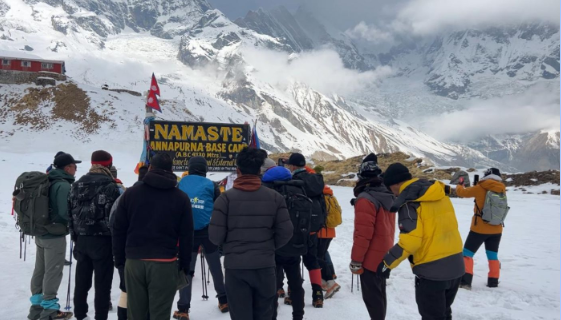

Nepal’s Annapurna region is one of the country’s most popular trekking destinations, offering dramatic mountain scenery, traditional villages, rhododendron forests, and spectacular Himalayan viewpoints. For travelers starting their journey in Pokhara, two popular options are Pokhara to Annapurna Base Camp treks-5days and Pokhara to Poon Hill treks.
Although both routes explore the Annapurna region, they provide different experiences. The five-day Annapurna Base Camp trek is a shorter, more demanding itinerary focused on reaching the famous base camp, while the Poon Hill trek is generally shorter and more accessible, with sunrise views of the Annapurna and Dhaulagiri ranges.
The right choice depends on your available time, fitness level, trekking experience, and preference for either a challenging high-altitude journey or a relatively short Himalayan adventure.
Pokhara to Annapurna Base Camp Treks – 5 Days
A five-day Annapurna Base Camp itinerary is designed for trekkers who want to reach the base camp within a limited timeframe. It typically involves driving from Pokhara to the road-accessible starting point before beginning the trek.
An itinerary can vary depending on the route, road conditions, weather, and trekking operator. A typical five-day schedule may look like this:
Day 1: Pokhara to Trek Starting Point – Chhomrong or Sinuwa
The journey begins with a drive from Pokhara toward the Annapurna region. Depending on the chosen route and road conditions, the trek may begin from an accessible settlement before continuing toward Sinuwa or Chhomrong.
The trail passes through traditional villages and forested sections, providing the first views of the surrounding mountains.
Day 2: Chhomrong/Sinuwa to Himalaya or Deurali
The trail continues through dense forests, waterfalls, and narrow mountain valleys.
As elevation increases, the landscape gradually changes. Trekkers may stay overnight around Himalaya or Deurali depending on the itinerary.
Day 3: Deurali to Annapurna Base Camp
This is one of the most significant days of the trek.
The route continues toward Machhapuchhre Base Camp before entering the Annapurna Sanctuary. From here, the trail leads toward Annapurna Base Camp.
At the destination, trekkers can enjoy spectacular views of the surrounding Himalayan peaks, including Annapurna South, Annapurna I, Hiunchuli, and Machhapuchhre.
Day 4: Annapurna Base Camp to Bamboo or Lower Elevation
After enjoying the mountain scenery, the descent begins.
Descending generally allows trekkers to cover more distance, although the trail can still be demanding on the knees. The overnight stop depends on the selected itinerary and trail conditions.
Day 5: Trek Down and Drive Back to Pokhara
The final day involves continuing downhill toward the road-accessible section of the route, followed by a drive back to Pokhara.
Because five days is a compact schedule, trekkers should be physically prepared for relatively long walking days.
Highlights of the Annapurna Base Camp Trek
The Pokhara to Annapurna Base Camp treks-5days itinerary offers several memorable highlights:
- Annapurna Sanctuary
- Annapurna Base Camp
- Machhapuchhre views
- Annapurna South
- Traditional mountain villages
- Rhododendron forests
- Waterfalls and mountain streams
- Himalayan landscapes
- Local Gurung and Magar culture
The combination of dramatic scenery and mountain communities makes the journey more than simply a walk to a viewpoint.
Pokhara to Poon Hill Treks
The Pokhara to Poon Hill treks route is one of the most accessible short treks in the Annapurna region.
Poon Hill is famous for its sunrise views over the Annapurna and Dhaulagiri mountain ranges. The trek typically passes through villages such as Tikhedhunga, Ghorepani, and Ghandruk, depending on the chosen itinerary.
A common itinerary takes around three to five days, although the duration can be adjusted according to the starting point, route, and transport arrangements.
Typical Poon Hill Trek Itinerary
Day 1: Pokhara to Ulleri/Nayapul Area and Trek to Ghorepani Region
The trek begins with a drive from Pokhara toward the trailhead. The walking route then passes through forests and traditional settlements.
The exact starting point can vary because road access and trekking routes change over time.
Day 2: Ghorepani to Poon Hill Sunrise and Trek to Tadapani
An early morning start takes trekkers to Poon Hill for sunrise.
From the viewpoint, the Himalayan panorama can include peaks from the Annapurna and Dhaulagiri ranges, depending on visibility.
After returning for breakfast, the trek continues toward Tadapani through forested trails.
Day 3: Tadapani to Ghandruk
The trail descends toward Ghandruk, a well-known Gurung village.
Ghandruk offers mountain scenery, traditional houses, local culture, and views of the surrounding peaks.
Day 4: Ghandruk to Roadhead and Drive to Pokhara
The trek continues toward the road-accessible section before a vehicle transfer brings trekkers back to Pokhara.
Depending on the selected itinerary, additional days can be added for a more relaxed journey.
Annapurna Base Camp vs. Poon Hill
Both routes offer Himalayan scenery but are different in terms of difficulty and objectives.
Annapurna Base Camp
The Annapurna Base Camp trek is more demanding because it reaches a considerably higher elevation and involves longer trekking days in a five-day itinerary.
It is particularly suitable for travelers who want to reach an iconic Himalayan base camp within a limited timeframe.
Poon Hill
Poon Hill is generally considered a shorter and more accessible trekking option.
Its major attraction is the sunrise viewpoint, making it suitable for travelers who have less time or prefer a relatively moderate Himalayan trek.
Best Time for These Treks
The main trekking seasons in the Annapurna region are generally spring and autumn.
Spring, particularly March to May, brings warmer temperatures and blooming rhododendrons at lower elevations.
Autumn, particularly September to November, is traditionally popular for clearer mountain views and stable trekking conditions.
Winter can bring cold temperatures and snow at higher elevations, while the monsoon season can produce rain, muddy trails, and reduced mountain visibility.
Weather conditions can change quickly in the mountains, so trekkers should check current forecasts and local trail conditions before departure.
Trekking Preparation
Physical preparation is important, particularly for the five-day Annapurna Base Camp itinerary.
Trekkers can prepare through:
- Regular walking or hiking
- Cardiovascular exercise
- Stair climbing
- Strength training
- Longer weekend hikes
- Gradual endurance building
The objective is not necessarily speed but the ability to walk for several hours on consecutive days.
What to Pack
A suitable packing list can include:
- Comfortable trekking boots
- Warm layers
- Waterproof jacket
- Trekking trousers
- Thermal clothing
- Gloves and warm hat
- Sunglasses
- Sunscreen
- Reusable water bottle
- Personal medication
- Basic first-aid supplies
- Headlamp
- Sleeping bag where required
- Trekking poles
- Portable charger
Packing requirements can vary according to season and accommodation arrangements.
Accommodation and Meals
Tea houses and trekking lodges are commonly used along established routes in the Annapurna region.
Accommodation is generally simple and practical, with basic rooms and shared facilities in many locations.
Meals commonly include traditional Nepali dishes such as dal bhat, as well as noodles, rice, soups, vegetables, eggs, and other basic trekking food.
Travelers should carry some snacks for longer walking sections.
Altitude Considerations
Altitude is an important consideration on the Annapurna Base Camp route.
Trekkers should increase elevation sensibly, remain hydrated, and pay attention to symptoms such as unusual headache, dizziness, nausea, extreme fatigue, or difficulty breathing.
Anyone experiencing significant altitude-related symptoms should inform their guide and consider descending if advised.
A five-day itinerary is relatively compressed, so appropriate planning and professional guidance are particularly important.
Key Points to Remember
- Pokhara to Annapurna Base Camp treks-5days provide a compact route to one of Nepal’s best-known Himalayan base camps.
- The five-day itinerary requires good physical preparation because walking days can be relatively long.
- Annapurna Base Camp offers views of major Himalayan peaks and the surrounding sanctuary.
- Pokhara to Poon Hill treks are generally shorter and more accessible.
- Poon Hill is particularly famous for sunrise views over the Annapurna and Dhaulagiri ranges.
- Ghandruk provides an opportunity to experience Gurung culture and mountain village life.
- Spring and autumn are traditionally popular trekking seasons.
- Weather and trail conditions can change quickly in the Himalayas.
- Proper footwear, layered clothing, sun protection, and hydration are essential.
- Trekkers should consider altitude when planning the Annapurna Base Camp route.
- Local guides can provide valuable assistance with navigation, accommodation, weather, and altitude management.
- Responsible trekking helps protect mountain communities and the natural environment.
Conclusion
The Pokhara to Annapurna Base Camp treks-5days and Pokhara to Poon Hill treks offer two different ways to experience the spectacular Annapurna region.
The five-day Annapurna Base Camp trek is a compact and physically demanding journey designed for travelers who want to reach the heart of the Annapurna Sanctuary within a limited timeframe. In contrast, the Poon Hill trek provides a shorter Himalayan experience centered around spectacular sunrise views, traditional villages, and accessible mountain trails.
Whichever route you choose, proper preparation, appropriate equipment, realistic scheduling, and attention to weather and altitude are essential. With thoughtful planning, both treks can provide an unforgettable combination of Himalayan scenery, local culture, and mountain adventure.