
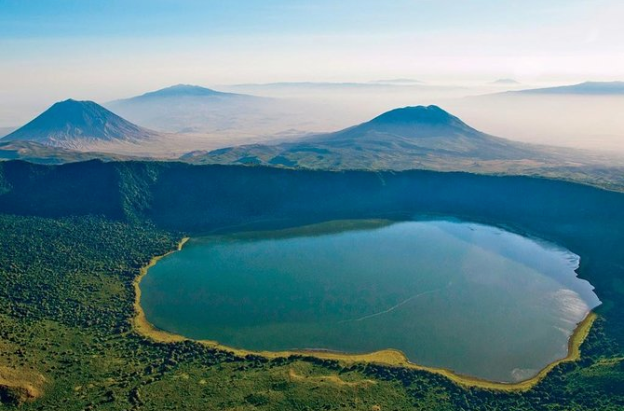

Some safari destinations impress you gradually. The Ngorongoro Crater does it in a single moment. You arrive at the rim in morning mist, the clouds part, and a vast green bowl opens beneath you, with herds, a shining soda lake and patches of forest laid out like a map. Down on the floor, thousands of animals share an area small enough to explore in a single morning.
An Ngorongoro Crater safari is a highlight of nearly every northern Tanzania itinerary, and for good reason. It delivers exceptional wildlife density, dramatic scenery and a rare chance to see black rhino. This guide covers what the crater is, what you can see, when to go, how the day works, and how to plan a trip that makes the most of it.
What Is the Ngorongoro Crater?
The Ngorongoro Crater is a huge volcanic caldera, formed when a giant volcano collapsed in on itself millions of years ago. It is often described as the largest intact, unflooded caldera in the world. The floor spans roughly 260 square kilometers, and the walls rise about 600 meters, enclosing a self-contained ecosystem of grassland, swamp, woodland and a shallow alkaline lake.
The crater sits within the Ngorongoro Conservation Area, a UNESCO World Heritage Site recognized for both its natural and cultural value. Unlike a traditional national park, the conservation area is multi-use: wildlife, Maasai pastoralist communities and conservation all coexist across a landscape that also includes the famous archaeological site of Olduvai Gorge.
Why the Wildlife Is So Concentrated
The crater’s steep walls form a natural boundary, and the floor holds year-round water and grazing. That combination supports an estimated 25,000 large animals, though some move in and out. The result is some of the most reliable and compact game viewing in Africa.
You can expect to see:
- Lions: The crater supports a healthy, well-studied lion population, and sightings are frequent.
- Black rhino: One of the best places in East Africa to see this critically endangered species, although sightings are often at a distance.
- African elephants: Mostly older bulls with impressive tusks, often feeding in the Lerai Forest.
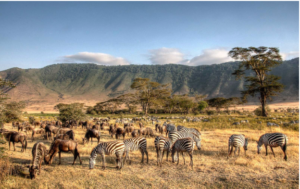
- Buffalo, wildebeest and zebra: Large herds that dot the open plains.
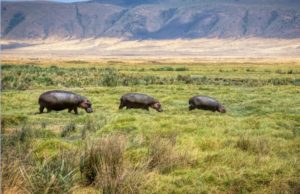
- Hippos: Resting in the pools near the picnic areas.
- Spotted hyenas, jackals and servals: Frequent predator and scavenger sightings.
- Flamingos and other birds: Lake Magadi can attract flocks of flamingos, and the crater’s birdlife includes ostriches, secretary birds, kori bustards and many raptors.
Leopards live in the forested areas but are elusive. Giraffes are notably absent from the floor, which is generally attributed to the steep walls and the lack of suitable browse.
Key Areas on the Crater Floor
Lake Magadi: The shallow soda lake at the heart of the crater. Depending on water levels and conditions, it hosts flamingos and other waterbirds and is a magnet for hyenas and jackals.
Lerai Forest: A fever-tree woodland on the crater’s southwestern side, good for elephants, monkeys and sometimes leopards.
Ngoitokitok Springs: A popular picnic site beside a pool of hippos and birdlife. Guests eat in designated areas, and a sharp eye on your lunch is wise, since black kites are known for swooping on food.
Open plains and Gorigor Swamp: Prime territory for lions, buffalo and large herds of grazers.
How a Crater Day Works
A typical Ngorongoro Crater game drive starts early. Vehicles descend a steep, one-way road from the rim soon after dawn, often around 6:30 or 7:00 am, when the light is soft and animals are active. Regulations limit the time spent on the crater floor, usually to around six hours, and visitors must ascend before the afternoon cut-off.
Only 4×4 safari vehicles are permitted, and a licensed guide is required. Your guide will adapt the route to recent sightings, share news with other drivers by radio, and balance time between wildlife viewing and the picnic stop.
Because the floor is relatively compact, you can see a remarkable amount in a half day. Many travelers find one full morning and midday on the floor is enough, though photographers and wildlife enthusiasts sometimes request a longer stay or an additional day.
The Best Time to Visit
The crater offers good game viewing throughout the year, but conditions vary:
- June to October (dry season): The most popular period, with excellent visibility and animals gathering near water. Expect more vehicles and cool, crisp mornings on the rim.
- January to February: Typically a calmer, drier spell between rains, with green scenery and good wildlife action. A strong option if you also plan to visit the southern Serengeti for calving season.
- March to May (long rains): The wettest months, with lush landscapes and fewer visitors, although cloud and mud can affect roads and views.
- November to December (short rains): Variable weather with growing greenery and quieter trails.
One feature that surprises many visitors is the temperature. The crater rim sits at roughly 2,200 meters above sea level, so mornings and evenings can be genuinely cold, even in dry season.
Where to Stay
Accommodation options fall into two broad categories.
Crater-rim lodges offer panoramic views over the caldera, often from rooms, terraces and dining areas. Waking up above the crater is a memorable experience in itself, and range from comfortable mid-range lodges to luxury properties. Fireplaces, warm bedding and good heating are valuable features, given the altitude.
Lodges in the surrounding highlands and Karatu area provide a more affordable base, along with farm-style settings, coffee plantations and access to nearby activities. The drive to the crater gate is short, making them a practical option for budget-conscious travelers.
Book early for peak season, particularly rim-view rooms, which are limited in number.
Beyond the Crater: Other Things to Do in the Conservation Area
A visit to Ngorongoro does not have to stop at the crater floor.
- Olduvai Gorge: Often called the “Cradle of Mankind,” this site has yielded important early human fossils and tools. A small museum explains the discoveries.
- Maasai cultural visits: Respectful, community-led visits offer insight into pastoralist traditions. Ask your operator how the benefits are shared with the community.
- Empakaai Crater and Ol Doinyo Lengai hikes: For adventurous travelers, guided hikes to the smaller Empakaai Crater and the volcano Ol Doinyo Lengai offer a very different experience. These typically require extra days and good fitness.
- Shifting Sands and Ndutu: Neighboring areas link naturally to the Serengeti migration route, particularly in the calving season.
How Ngorongoro Fits Into a Tanzania Itinerary
Ngorongoro is most commonly paired with other Northern Circuit destinations. A classic sequence is Tarangire for elephants and baobabs, the Serengeti for big cats and the migration, and the crater to finish with dense wildlife and scenic drama. For shorter trips, a two- or three-day combination of Lake Manyara or Tarangire with the crater works well.
Allow at least one full day for the crater, and ideally an overnight on the rim, so you aren’t rushing the descent or leaving in a hurry.
Practical Tips for a Better Safari
- Pack layers. Fleece, a warm jacket, a hat and gloves are useful for rim evenings and early starts.
- Bring binoculars and a telephoto lens. Rhinos and some predators are often far away.
- Protect your food. Eat inside the vehicle or in designated areas.
- Start early. Be at the gate shortly after opening to enjoy cooler air, better light and fewer vehicles.
- Hire an experienced guide. Local knowledge makes a major difference to the quality of sightings.
- Check inclusions. Conservation area fees, crater service fees and vehicle charges can be significant, so confirm what your quote covers.
- Respect the wildlife. Stay in the vehicle, keep voices low and never approach animals.
Responsible Travel in the Conservation Area
Ngorongoro is a protected landscape where people, livestock and wildlife share the land. Choose operators and lodges that employ local staff, follow park regulations and invest in community projects. Avoid single-use plastics where possible, and follow your guide’s advice on respectful behavior during cultural visits. Your choices help sustain both conservation and local livelihoods.
Conclusion
The Ngorongoro Crater safari is one of Africa’s most efficient and rewarding wildlife experiences. Within a single, spectacular caldera, you can encounter lions, elephants, hippos, rhinos and countless grazers, all framed by dramatic scenery. Success comes down to a few smart decisions: start early, dress warmly, work with an experienced guide, stay on the rim if you can, and give the crater the time it deserves. Paired with the Serengeti and Tarangire, it forms the centerpiece of a classic northern Tanzania safari, and it is a place most visitors remember long after they have returned home.
Key Takeaways
- The Ngorongoro Crater is a vast volcanic caldera of about 260 square kilometers, with walls roughly 600 meters high.
- It is a UNESCO World Heritage Site and part of a multi-use conservation area shared with Maasai communities.
- Roughly 25,000 large animals live here, including lions, elephants, hippos and endangered black rhinos.
- Game drives start early, and time on the crater floor is limited, usually to about six hours.
- June to October is the busiest season, while January to February and the green seasons offer good value and fewer crowds.
- Rim temperatures are cool, so pack warm layers.
- Combine the crater with the Serengeti and Tarangire for a complete northern Tanzania safari.
Frequently Asked Questions
- How long should I spend at Ngorongoro Crater?
A single half-day to full-day game drive on the crater floor is enough for most visitors. Staying one night on or near the rim lets you enjoy the views without rushing. - What animals can I see in the crater?
Lions, elephants, buffalo, zebra, wildebeest, hippos, hyenas, jackals, black rhinos, flamingos and many bird species. Leopards are present but rarely seen, and giraffes do not live on the floor. - Is the Ngorongoro Crater worth visiting?
Yes. The scenery is exceptional, wildlife density is high, and it is one of the better places in East Africa to try for a black rhino sighting. - What is the best time to visit?
June to October offers the clearest conditions and the most reliable sightings. January to February is also excellent, and the wetter months bring lush scenery and quieter roads. - Is it cold at Ngorongoro?
The rim is around 2,200 meters above sea level, so mornings and evenings can be cold. Bring a warm jacket, a hat and gloves. - Can I do a Ngorongoro Crater safari as a day trip?
Yes, many travelers visit as a day trip from Arusha or Karatu, though it makes for a long day. An overnight stay in the area is more comfortable and relaxed. - Can I walk inside the crater?
Walking on the crater floor is not permitted, except at designated picnic spots. Game viewing is done from 4×4 vehicles with a licensed guide. - Will I see the Big Five?
You can see lions, elephants, buffalo and rhinos here. Leopards are present but difficult to spot, so a sighting is possible but never guaranteed. - How does Ngorongoro compare with the Serengeti?
The crater offers dense, concentrated wildlife in a compact area, while the Serengeti offers vast open landscapes and the migration. Most travelers visit both. - Who lives in the Ngorongoro Conservation Area?
Maasai pastoralist communities live in the conservation area alongside wildlife. Respectful, community-led cultural visits can be arranged through responsible operators.